Skip to content
Let's get straight to it: do you really need a will? For our neighbors here in Humble, the simplest answer is yes, absolutely.
While Texas law doesn't force you to have one, creating a will is the single most powerful thing you can do to shield your family from confusion and conflict down the road. Think of it as leaving behind a detailed roadmap instead of forcing your loved ones to navigate the complicated Texas legal system on their own, all while they're grieving.
Why a Will Is So Important for Humble Families
For those of us here in Humble, Atascocita, and Kingwood, it's natural to push aside thoughts about what happens after we're gone. It's uncomfortable. But putting it off means you're handing over control of everything you've worked for.
If you pass away without a will, the State of Texas steps in and decides who gets your property based on a rigid legal formula. A judge—a complete stranger—could even be the one to decide who raises your children.
This situation has a legal name: dying "intestate." And believe me, the outcome is almost never what you would have wanted. It often sparks family arguments, creates unexpected financial burdens, and adds immense stress to the people you love most.
The Reality of Not Having a Plan
The gap between knowing you should have a will and actually getting one done is huge. A recent survey found that while most people agree estate planning is important, only 31% have a will in place.
That’s a staggering number of families left vulnerable. Creating a will isn't just for the wealthy; it’s about taking responsibility and showing you care. It’s the only way to make sure your final wishes are heard loud and clear.
A will is more than just a legal document—it's your final act of love and protection for your family. It provides clarity and security, ensuring your voice is heard long after you are gone.
Having a Will vs. No Will in Texas
It's easy to get lost in the "what-ifs," so let's make it simple. The table below breaks down exactly what you control with a will versus what the state dictates without one. It's a stark contrast that shows just how much is at stake for your family's future.
| Decision | With a Will (Your Choice) | Without a Will (State of Texas Decides) |
|---|---|---|
| Who Inherits Your Property | You name specific people and what they receive. | A rigid legal formula divides assets among relatives. |
| Guardian for Minor Children | You nominate the person you trust most. | A court appoints a guardian, who may not be your choice. |
| Executor of Your Estate | You choose a reliable person to manage your affairs. | A judge appoints an administrator, often a stranger. |
| Distribution of Assets | Assets are distributed according to your wishes. | Your spouse may have to share property with your children. |
| Gifts to Friends or Charity | You can leave gifts to non-relatives or causes you care about. | Only legal heirs can inherit. Friends and charities get nothing. |
| Family Harmony | Clear instructions minimize confusion and potential disputes. | Uncertainty often leads to family conflict and legal battles. |
As you can see, a will puts you firmly in the driver's seat.
By taking this one crucial step, you give your family the gift of stability and peace of mind when they need it most. Our team is here to guide Humble families through the process of creating comprehensive wills and trusts, ensuring your legacy is protected. Don't leave your family’s future up to chance.
What Happens When You Die Without a Will in Texas
It’s a tough thing to think about, but let's picture a family right here in Northeast Houston. A parent passes away without warning, leaving no will behind. In the middle of their grief, the family is thrown into a confusing and often stressful legal maze managed by the Texas court system. This is the reality of dying intestate—the legal term for passing away without a will.
When you don't have a will, you essentially lose your say in who gets your property. The State of Texas takes over, distributing everything you own based on a rigid legal formula known as intestacy laws. These laws are completely impersonal; they don't care about your specific relationships, verbal promises you made, or what your true wishes might have been. They just follow a predetermined script.
The infographic below paints a stark picture of the two paths your estate can take. It clearly shows the control you have with a will versus the uncertainty you leave behind without one.
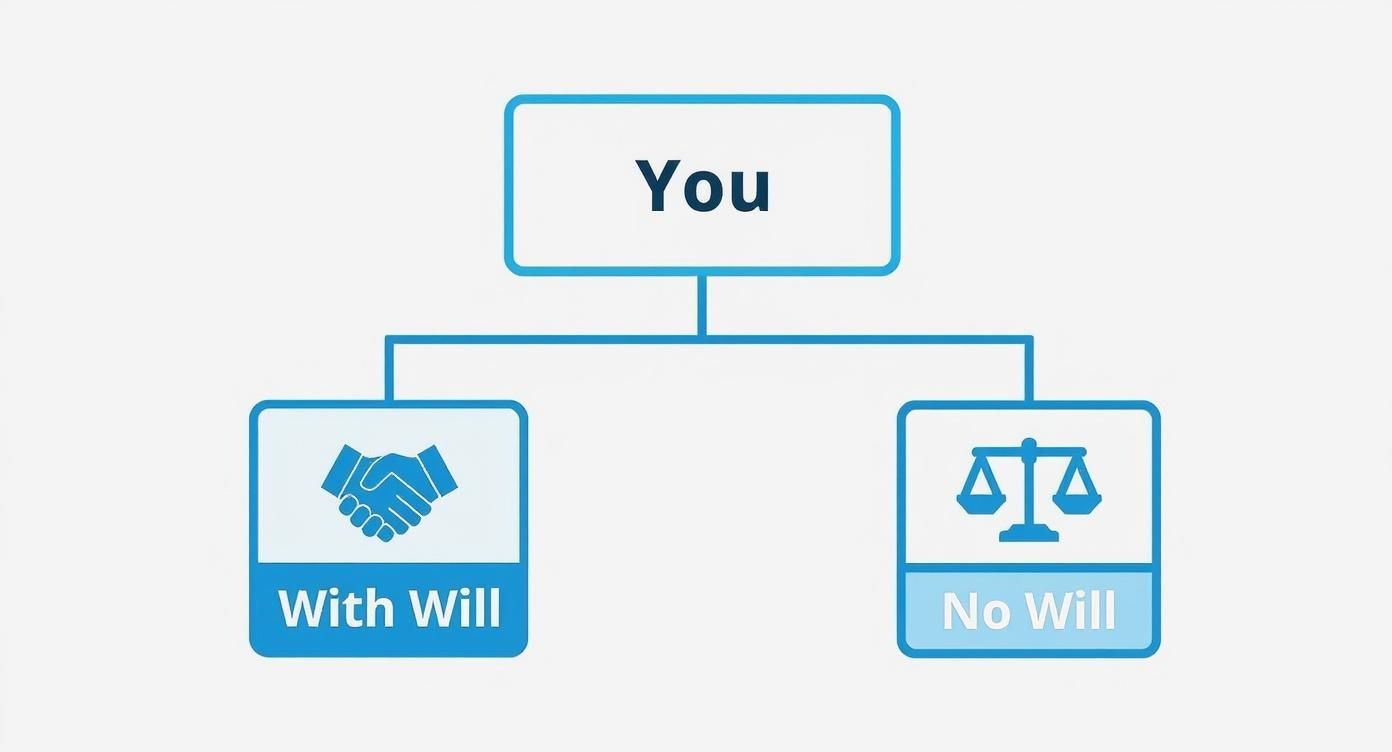
As you can see, a will puts you in the driver's seat of your legacy. Dying without one hands the keys over to the courts.
How Texas Divides Your Property
For many families in Humble and Atascocita, the state's rules for dividing property can be a real shock. Texas law splits everything into two buckets: community property, which is basically everything you and your spouse acquired during your marriage, and separate property, which is anything you owned before the wedding or received as a gift or inheritance.
The way the state divides it all up is surprisingly complicated and often leads to outcomes people never would have wanted.
- If you have a spouse and children: Your surviving spouse gets to keep their half of the community property. But your half? That goes directly to your children. When it comes to your separate property, your spouse gets a one-third share, and your kids get the other two-thirds. This can create a nightmare scenario where your spouse is forced to co-own the family home with your children, leading to immense financial and emotional stress.
- If you have a spouse but no children: It gets a little simpler. Your spouse inherits all the community property. But they might have to share your separate property with your parents or siblings, if they're still living.
- If you are unmarried with children: Your children inherit everything, divided equally among them.
- If you are unmarried and have no children: Your property first goes to your parents. If they’ve passed away, it then goes to your siblings or even more distant relatives.
Dying without a will doesn't just divide your assets—it can divide your family. The state’s rigid formulas often create unintended consequences, leading to family disputes, costly court battles, and long, stressful delays.
This whole court-supervised mess is known as probate. And when there's no will, the probate process is almost always more difficult and expensive. We cover this in more detail in our guide on how to avoid probate in Texas.
At the end of the day, a will is the most powerful tool you have to give your family stability and peace of mind. It makes sure your assets go to the people you choose, preventing the emotional and financial chaos that intestacy so often leaves in its wake.
Why Every Stage of Life in Humble Calls for a Will
It's a common misconception that you only need a will when you're older or have accumulated a lot of wealth. But here in Humble, we see every day how that couldn't be further from the truth. A will is one of the most fundamental tools for adults at every single stage of life, providing essential clarity and protection whether you're just starting your career or enjoying a well-earned retirement.

Life is full of milestones, and each one brings new assets and new responsibilities. From buying your first home in Atascocita to welcoming a new baby into the family, your financial and personal situation is constantly evolving. A will shouldn't be a one-and-done document; it should adapt right along with you.
For Young Parents in Kingwood and Atascocita
If you have minor children, the question of "do I need a will?" has a very clear and urgent answer: yes, immediately. A will is the only legal document where you can officially name a guardian—the person you trust to raise your children if the unthinkable were to happen.
Without a will, that deeply personal choice is taken out of your hands. Instead, a judge who doesn't know you, your family, or your values will make this critical decision. By naming a guardian yourself, you provide your children with stability and ensure they are cared for by someone you’ve chosen during an incredibly difficult time.
For Unmarried Couples and Blended Families
Texas law is very specific about who inherits, and it doesn't automatically recognize the rights of unmarried partners. If you and your partner have built a life together in Northeast Houston but aren't legally married, your partner has no automatic inheritance rights.
A will is the only way to guarantee they receive the assets you want them to have, whether it’s your shared home, your savings, or sentimental belongings. The same logic applies to blended families. A will allows you to spell out exactly how you want your assets divided between your current spouse, children from a previous relationship, and any children you may have together, leaving no room for doubt.
A will isn't really about planning for death; it's about planning for your family's life. It ensures your wishes are honored, your loved ones are protected, and your legacy is secure, no matter what your circumstances are.
For Homeowners and Business Owners
For most people, their home is their most significant asset. A will clearly states who inherits your property, which can prevent a world of confusion and potential disputes among family members. This one simple step can save your loved ones from a complicated and expensive legal battle over the family home.
For small business owners in Humble, a will is a critical part of your business succession plan. It can dictate who takes over the business, how it should be managed, or if it should be sold. Without these clear instructions, the business you worked so hard to build could be forced to close its doors, leaving your family and employees in a very tough spot.
The growing awareness of estate planning isn't just a local trend. Globally, the market for online will-writing services was valued at $1.26 billion in 2025 and is projected to more than double by 2034. As you can find in reports from Business Research Insights, this surge shows a worldwide recognition that having a plan is essential, regardless of how simple or complex your assets are.
Common Myths About Texas Wills That Hold People Back
Plenty of families right here in our Humble community drag their feet on creating a will. It's usually not about being careless; it’s because of some common myths about how Texas law actually works. These misconceptions can give you a false sense of security, leaving your family in a tough spot when you're no longer around.
Let's bust some of the most stubborn myths we hear all the time from our neighbors in Humble, Atascocita, and Kingwood.
Myth 1: My Estate Is Too Small for a Will
This is probably the biggest one we hear. People think wills are just for the wealthy, but that couldn't be further from the truth. A will is for anyone who wants a say in where their property goes after they're gone.
It doesn't matter if you have a house, a car, a savings account, or just a box of old family photos with priceless sentimental value. A will is your way of making sure those assets end up with the people you choose.
Without one, even a modest estate can get bogged down in the Texas probate courts. The legal fees and court costs alone can chew through what you wanted to leave behind. A simple will makes everything smoother, faster, and far less expensive for your family.
Myth 2: My Spouse Automatically Inherits Everything
This is a dangerous assumption that many married couples in Texas make. The reality is, under Texas law, your surviving spouse does not automatically get everything. It’s a shock to many, but it's true.
If you have children, your spouse only keeps their half of the community property. Your half doesn't go to your spouse—it goes directly to your children.
Think about what that means. It could force your spouse to co-own the family home with your kids, leading to a financial and emotional nightmare. A will is the only tool that guarantees your spouse is fully protected and inherits your entire estate, if that's what you want.
Having a will is not about the size of your bank account; it's about the size of your commitment to protecting your family. It ensures your voice is heard, your wishes are respected, and your loved ones are cared for.
Myth 3: My Family Knows What I Want
We all trust our families. But verbal promises and handshake agreements, no matter how heartfelt, mean nothing in a Texas probate court. They simply don't hold up.
Relying on your family to "do the right thing" also puts a massive weight on their shoulders while they're grieving. Different relatives might remember your wishes differently, which can easily spiral into confusion, arguments, and even permanent family feuds.
A legally sound will cuts through all the noise. It’s your final word, a clear set of written instructions that leaves no room for debate. This simple document is one of the kindest gifts you can give your family, offering them clarity and peace when they need it most.
Making a will is a straightforward process that puts you in control. The next step is understanding how to get it done right.
How to Create Your Will in Humble: A Practical Roadmap
The thought of drafting a will can feel intimidating, maybe even a little heavy. But it doesn't have to be. When you break it down into a few clear, manageable steps, the whole process becomes much less about a daunting legal task and more about making confident decisions to protect your family's future. For our neighbors here in Humble, this simple roadmap will help get you started.

Think of it like building a solid foundation for your family’s security. Each step you take adds another layer of protection, making absolutely sure your final wishes are understood and, most importantly, legally binding.
Step 1: Take Inventory of Your Assets
The first step is simply getting a handle on what you own. You don't need a forensic accountant's spreadsheet, just a solid list of your major assets. This gives you a clear snapshot of your estate and helps ensure nothing important gets overlooked.
Your list should probably include things like:
- Real Estate: Your home in Atascocita, that rental property you've been managing, or any other land you own.
- Financial Accounts: Think checking and savings accounts, retirement funds like a 401(k) or IRA, and any investment portfolios.
- Personal Property: This covers vehicles, valuable jewelry, family heirlooms, and anything else with significant monetary or sentimental value.
- Life Insurance Policies: Just jot down the policy number and the company that holds it.
This inventory is the bedrock of your estate plan. It’s what you'll be directing to your loved ones, so knowing what's there is square one.
Step 2: Choose Your Beneficiaries and Executor
Now for the "who." Who do you want to receive your assets? These people are your beneficiaries. Be as specific as you can—listing full names and what you want each person to inherit is the best way to prevent confusion and family disagreements later on.
Just as critical is choosing an executor. This is the person (or sometimes, an institution) you trust to be in charge of carrying out your will's instructions. They’ll be responsible for handling any final debts and then distributing your assets to your beneficiaries. Your executor needs to be someone you consider responsible, organized, and completely trustworthy.
Step 3: Name a Guardian for Your Children
For parents in Humble and Kingwood, this is easily the most important step in the entire process. Your will is the one legal document where you can officially nominate a guardian to raise your minor children if you can't.
Choosing a guardian is a profound decision. It’s about entrusting your most precious legacy—your children—to someone who shares your values and will provide them with a loving, stable home.
If you don't name a guardian, a judge who doesn't know you or your family will be forced to make that choice for you. Taking the time to clearly state your wishes provides immense peace of mind and security for your children's future.
Step 4: Consult with a Humble Estate Planning Attorney
You can find do-it-yourself will templates online, but they're often a risky bet. Many fail to meet the specific, sometimes tricky, legal requirements of Texas law, and an invalid will is no better than having no will at all.
Working with a local attorney is the surest way to know your document is legally sound and truly reflects your wishes. An experienced lawyer can also open your eyes to other planning tools. For instance, you can learn more about how a will compares to another common tool by reading about what is a living trust.
At The Law Office of Bryan Fagan, we're here to walk you through each of these steps, making the entire process as straightforward and stress-free as possible.
Take the First Step to Protect Your Family Today
Thinking about a will can feel overwhelming, but taking that first step is one of the most powerful things you can do for the people you love. It’s about more than just documents; it's about securing peace of mind, knowing your wishes will be heard and your family will be cared for.
Here at The Law Office of Bryan Fagan, we're not just attorneys—we're your neighbors in the Humble, Atascocita, and Kingwood communities. We're deeply invested in helping local families like yours build a secure future.
It's easy to put this off, but the best time to plan is now, before a crisis forces your hand. We invite you to sit down with us for a free consultation at our Humble office. There's absolutely no pressure or obligation.
You'll get a chance to speak with a local lawyer who genuinely cares, get your questions answered, and understand the path forward. Let us help you put a plan in place so you can feel confident that you’ve protected what matters most, no matter what tomorrow brings.
Frequently Asked Questions About Texas Wills
Even with a good grasp of why a will is so critical, it's natural to have more questions pop up. We see it all the time with our clients here in Humble. Getting those lingering questions answered is the final step to feeling truly prepared. Let’s tackle a few of the most common ones we hear.
How Much Does It Cost to Make a Will in Texas?
This is probably the number one question people ask, and the honest answer is: it depends. The cost really hinges on how complex your family's situation and your assets are.
You’ve probably seen those DIY templates online, and sure, they look cheap at first glance. But the danger is that they often don't account for the unique quirks of Texas law. A small mistake or omission in a boilerplate document can end up costing your family a fortune in legal fees down the road, or worse, could even get the will thrown out by a judge.
Working with an attorney who knows Texas estate law inside and out is an investment in peace of mind. Here at The Law Office of Bryan Fagan, we start with a free consultation to talk through your specific needs and give you a straightforward breakdown of the costs. No surprises, no hidden fees.
Can I Name a Guardian for My Children in My Will?
Absolutely, and if you have kids, this is arguably the single most important reason to get a will in place. Your will is the only legal document where you can officially name the person you want to raise your children if the unthinkable happens.
Think about the alternative: without your written instructions, a judge who has never met you, your kids, or your family will be forced to make that monumental decision for you. Naming a guardian in your will ensures your children have stability and are cared for by someone you trust during an incredibly traumatic time.
How Often Should I Update My Will?
Your will isn't a "set it and forget it" document. A good rule of thumb is to pull it out and review it every 3-5 years. More importantly, you should always revisit it after a major life event.
Life moves fast, and your will needs to keep up. Be sure to schedule a review after things like:
- Getting married or divorced
- The birth or adoption of a new child
- Buying a new home, whether it’s in Atascocita, Kingwood, or right here in Humble
- A major shift in your finances, for better or worse
An outdated will can create as much chaos and confusion as having no will at all. Keeping it current is key to making sure your plan still works for the people you love.
The best answers are always the ones that apply directly to your life. The only way to get that is by talking to an experienced local attorney. At The Law Office of Bryan Fagan, we're dedicated to helping our neighbors in the Humble community protect what matters most. Schedule your free, no-obligation consultation with us today and let's get your questions answered.