
It's the phone call everyone in Humble dreads. That jarring, middle-of-the-night ring that pulls you from sleep into a state of panic. A loved one has been arrested in Harris County, and you're the one they've called for help.
Before you do anything else, take a breath. Here at The Law Office of Bryan Fagan, we understand how stressful this is for local families. It's crucial to understand that bail isn't a punishment or a fine. It's simply a financial guarantee to the court that the person you're helping will show up for their future court dates. Getting them out involves finding them, figuring out the bail amount, and deciding how to pay it.
The Late-Night Call: Understanding Arrests in Humble

Feeling confused and overwhelmed is a completely normal reaction. Whether your family member was arrested in Humble, Atascocita, or Kingwood, the first few moments can feel like a blur. Here at The Law Office of Bryan Fagan, our Humble-based team has guided countless local families through this exact situation, and our goal is to bring some clarity to a very stressful time.
First, let's break down what happens right after an arrest in our area. The individual is typically taken to a local police station for some initial processing. From there, they are usually transferred to a larger Harris County jail facility for the formal booking procedure.
What Happens During Booking?
Once they arrive at the jail, the booking process begins. This is a standardized procedure where law enforcement will:
- Record the person's name, address, and other personal information
- Take their fingerprints and a photograph (the "mugshot")
- Collect and inventory their personal belongings for safekeeping
- Run a criminal background check to see if they have any prior arrests or outstanding warrants
After booking, the individual will appear before a judge or magistrate. This is where the bail amount gets set. This isn't just a random number; it's based on specific factors outlined in Texas law. The court will look at the seriousness of the alleged crime (like a DWI or assault), the person's criminal history, and whether they have strong ties to the Northeast Houston community, which makes them less of a flight risk.
The financial pressure of this process can hit local families hard. We've seen it time and time again—that frantic 2 a.m. call from someone stuck in jail simply because they can't afford the bail amount. This isn't an isolated problem. In fact, nationally, about 70% of the 664,000 people in jail on any given day are there awaiting trial, not because they've been convicted of a crime.
After bail is set, the next critical event is the arraignment. This is the first formal court appearance where the charges are officially read, and a plea is entered. It's a pivotal moment in any criminal case.
Understanding what happens at this initial hearing is vital, as key legal decisions are made that can affect the entire case. To get a better sense of this crucial step, you can learn more about what happens at an arraignment hearing in our detailed guide. Once that's on your radar, you can focus on the practical steps of getting them released.
Finding Out Where They Are in Harris County
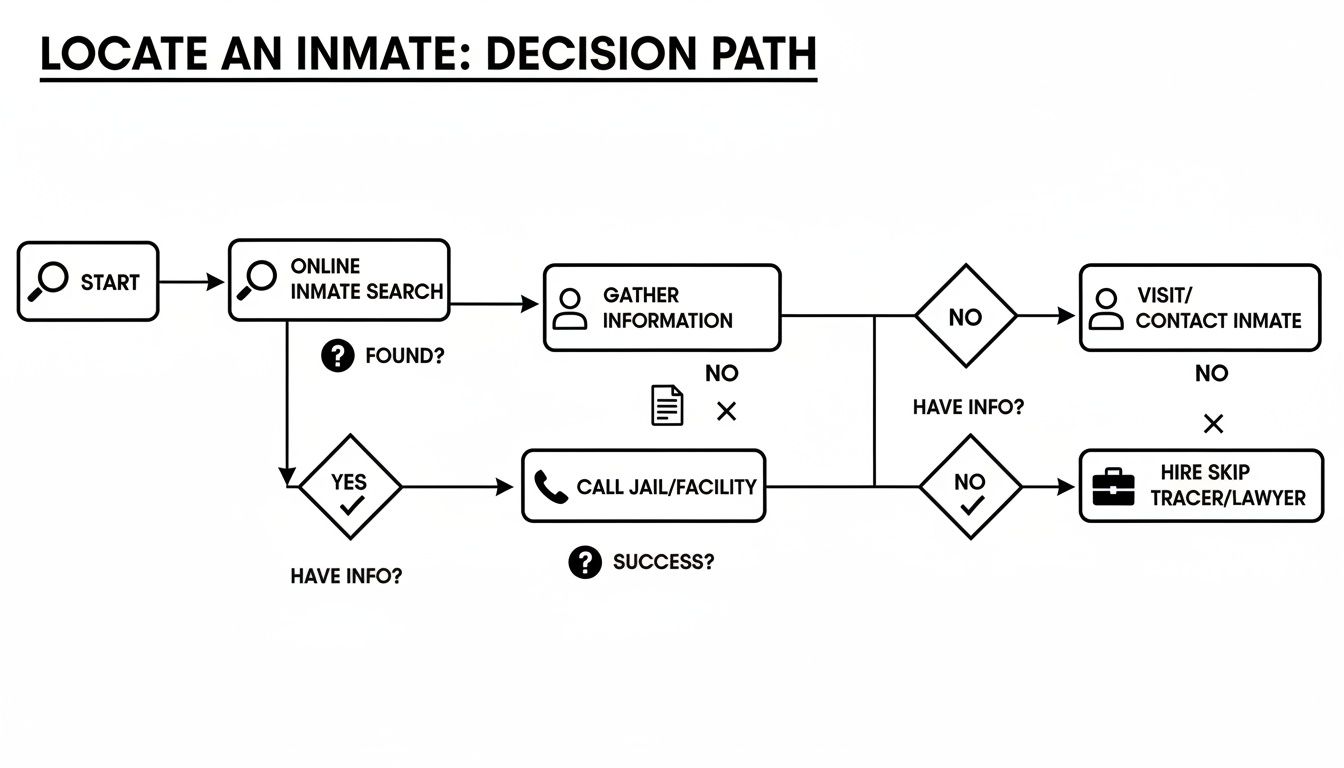
First things first, you can't help if you don't know where they are and how much it's going to cost. Before you can even think about bail, you need to confirm two key details: which facility is holding them and the exact bail amount set by the judge.
Luckily, for anyone dealing with an arrest in Humble, Kingwood, or nearby Northeast Houston areas, Harris County has an effective online system to track this down. It’s your fastest route to getting the facts straight.
The best place to start is the Harris County Sheriff’s Office Public Inmate Search Portal. Think of this as your direct window into the jail's live records. It's online, available 24/7, and is the most reliable source of information.
How to Use the Online Inmate Search
To get a clean result, you’ll want to have the person’s full legal name and their date of birth handy. You can try searching with just a last name, but if it's a common one like "Smith" or "Garcia," you'll be sifting through a long list, which can be stressful and confusing.
Once you find the right person, the results page will give you the critical information you need to move forward:
- Booking Number: Every inmate gets a unique ID number when they're processed. This number is gold. Write it down. You'll need it when talking to jail staff or a bail bondsman.
- Specific Charges: The portal will list exactly what they've been arrested for. This is important because the seriousness of the charges is the biggest factor in how high the bail is set.
- Bail Amount: This is the number you're looking for—the total dollar amount required for their release.
Having these details makes all the difference. Knowing the bail is $2,500 for a misdemeanor versus $25,000 for a felony completely changes the game. This tool removes the guesswork and gives you a solid foundation for your next move.
What to Do If You Can't Find Them Online
Let's be real, technology glitches. And sometimes, the system just can't keep up. If someone was just arrested in Atascocita, it might take a few hours for their information to be processed and pop up in the online search. It's a common lag.
If your search comes up empty or the details look off, don't panic. The next step is to pick up the phone and call the Harris County Jail directly.
A Quick Tip from a Local Attorney: Before you dial, have their full name (spelled correctly) and their date of birth ready to go. If you somehow have their booking number already, lead with that—it's the quickest way for the staff to pull up the file.
Calling a jail can be nerve-wracking, we get it. Just take a breath, stay calm, and be polite. The person on the other end of the line deals with frantic calls all day, so being prepared and courteous will get you the answers you need much faster. They can confirm if your loved one is in their custody and provide the bail and booking information.
Once you have those details confirmed, either from the portal or a phone call, you're officially ready to start looking at how to post their bail.
Posting Bail in Harris County: Cash vs. a Bail Bondsman
Once the judge sets the bail amount, you’ve arrived at a critical fork in the road. For families in Humble, Atascocita, and the surrounding Northeast Houston communities, the choice you make next carries serious financial weight. You generally have two ways to secure a release: paying the entire bail amount yourself with a cash bond, or hiring a bail bondsman to post it for you.
Let's break down what each path looks like so you can decide what makes the most sense for your family's situation.
The Cash Bond Option: Paying in Full
A cash bond is exactly what it sounds like—you pay 100% of the bail amount directly to the court. If bail is set at $5,000, you’ll need to come up with the full $5,000. For those who have the funds readily available, this is often the most direct route.
The big upside here is that your money is refundable. After the case concludes and assuming the defendant has shown up for every single court date, the county will return the full bail amount, though they might keep a small portion for administrative fees.
To post a cash bond in person, you’ll typically head to the Harris County Sheriff's Office Inmate Processing Center. Make sure you have the defendant's full name and booking number handy to ensure a smooth process.
The Bail Bondsman Option: Paying a Fee for Assistance
What if you don't have thousands of dollars sitting in a bank account? That's the reality for most families in Humble, and it's why bail bondsmen exist. A bondsman is a state-licensed agent who acts as a middleman, posting the full bail amount to the court on your behalf.
In exchange for this service, you pay them a non-refundable fee, which in Texas is typically 10% of the total bail. So, for that same $5,000 bail, you'd pay the bondsman $500. This $500 is their fee for taking on the financial risk—you will not get it back, even when the case is over.
A Helpful Analogy: Think of a bail bondsman as an insurance agent for the court. They guarantee the full bail amount will be paid if the defendant skips town, and your 10% fee is the premium for that insurance policy.
The bail bond industry is a huge part of our justice system. In fact, statistics show that only about 4% of people nationwide are able to pay the full bail amount themselves. The vast majority rely on bondsmen, which highlights just how critical these services are for getting a loved one back to their job, family, and daily responsibilities in communities like Kingwood and Atascocita. You can learn more about bail bond industry trends and statistics to see the bigger picture.
Cash Bail vs. Bail Bondsman: A Comparison for Humble Families
This table helps you quickly compare the two main options for posting bail in Harris County.
| Feature | Cash Bail (Paying in Full) | Using a Bail Bondsman |
|---|---|---|
| Upfront Cost | 100% of the total bail amount. | Typically 10% of the total bail amount. |
| Refundability | Fully refundable at the end of the case (minus small court fees), assuming all court dates are met. | Not refundable. The fee is the bondsman's payment for their service and risk. |
| Who It's For | Families with significant liquid assets who can afford to have a large sum of money tied up for months. | Families who cannot afford the full bail amount but can manage the smaller, non-refundable fee. |
| Potential for Collateral | Not applicable. You are providing the full cash amount. | May be required for very high bail amounts or if the defendant is considered a high flight risk (e.g., car title, property). |
| Complexity | Simpler process. You pay the court directly and get a refund directly from the court. | Involves a legal contract with a third party. You need to understand the terms, fees, and responsibilities. |
Choosing the right path comes down to your family's specific financial circumstances and your comfort with the risks involved.
A Quick Word on Collateral and Finding a Good Bondsman
Sometimes, for larger bail amounts or when a defendant seems like a flight risk, the 10% fee isn't enough for the bondsman. They may also ask for collateral—a valuable asset like a car title or property deed that you pledge against the bond. If the defendant misses court, the bondsman has the right to take that collateral to cover the full bail they now owe the court.
This is why it is absolutely essential to work with a reputable, licensed bondsman. A professional will walk you through the contract, be upfront about all fees, and patiently answer your questions. Be cautious of anyone using high-pressure tactics or being vague about the terms. A good bondsman is an ally in a difficult time; a bad one just adds to the stress.
What You're Legally Responsible For as a Cosigner
Putting up bail for someone is a huge show of faith, but it's not just a kind gesture or a simple loan. When you cosign a bail bond, you're signing a serious legal contract with the bail bondsman. This makes you the indemnitor—a legal term for the person who guarantees the defendant will show up for every single one of their court dates in Harris County.
This is a heavy responsibility. You're putting your own financial well-being on the line to vouch for them. For families here in Humble, Atascocita, and Kingwood, really getting a grip on this commitment from the start is the best way to avoid a financial nightmare later on. As local attorneys who care about our community, we say this not to scare you, but to make sure you go into this with your eyes wide open.
The Heart of the Agreement
At its core, your main job as a cosigner is simple, but crucial: make sure the person you bailed out gets to every court hearing until their case is completely over. It doesn't matter if they are ultimately found innocent or guilty—your legal obligation is only finished when the judge officially closes the case.
This often means you'll need to be an active presence in their life throughout the legal proceedings. You'll probably find yourself:
- Staying in touch: You'll need to check in with them regularly about their court schedule.
- Giving reminders: It’s easy to lose track of dates, so helping them remember is key.
- Providing support: A little encouragement can go a long way in helping them meet their legal obligations.
Basically, you become their accountability partner. The bondsman is counting on you to keep the defendant on the straight and narrow, just as the court is counting on the bondsman.
When Things Go Wrong: The Risk of a Missed Court Date
This is the part you absolutely must understand. If the defendant fails to appear (FTA) for a court date, a cascade of serious consequences kicks off, and you, the cosigner, are standing right in the middle of it.
First, the judge will almost certainly issue a bench warrant for their arrest on the spot. At the same time, the court will forfeit the bail bond. This means the entire bail amount is now due to the court. The bondsman has to pay it, and you can bet they will come to you to get that money back.
Let’s use a real-world example. Say you cosigned a $20,000 bond for a family member. If they skip town, the bondsman can, and will, sue you for the full $20,000. If you put up property as collateral—like the title to your car or the deed to your home in Northeast Houston—the bondsman has the legal right to seize it and sell it to cover their loss.
This isn't a gamble you should take lightly. It's exactly why you should only ever cosign for someone you know inside and out and trust completely. For a deeper look into what this entails, you can read more about the responsibilities of a bail bond cosigner.
Bailing someone out is more than a financial move; it's a lifeline that helps keep people connected to their jobs, families, and communities while they navigate the justice system. The positive impact is undeniable when you see the data. A great example is The Bail Project. Their 2025 statistics showed they helped with 34,572 bailouts, and their nearly 40,000 clients had an incredible 92% court appearance rate. This success kept people out of jail for over 1.3 million days of unnecessary pretrial detention and saved taxpayers an estimated $107 million. You can see these powerful findings from The Bail Project for yourself. These numbers prove that the system can work when people have support.
As a cosigner, you are that critical support system. Your commitment allows your loved one to keep their life on track while working with their legal team to build a strong defense. If you're considering taking on this role but still have questions about the risks, our Humble office is here to help. Schedule a free, completely confidential consultation with us to talk through your specific situation.
What Happens After Your Loved One Is Released on Bail?

Seeing your family member walk out of jail brings an incredible, overwhelming wave of relief. That first hug is a moment you’ll never forget. But for families here in the Humble area, it's crucial to understand that this is just the beginning of the legal fight, not the end of it.
The focus has to shift immediately from the crisis of getting them out of jail to building a solid plan for their defense. The single most important thing you can do now is get an experienced criminal defense attorney on their side. Posting bail got them home; a skilled lawyer is the one who will fight to protect their future.
Understanding and Following the Conditions of Release
When someone is released on bail in Harris County, their freedom comes with strings attached. The court sets specific conditions of release—a strict set of rules they have to follow until their case is fully resolved. If they violate even one of these conditions, the judge can revoke their bail, and they’ll be right back in jail.
These aren't suggestions; they are legally binding court orders. The exact conditions can vary quite a bit depending on the alleged crime, but some of the most common requirements we see for Humble residents include:
- No-Contact Orders: This is extremely common in cases involving assault or any kind of family violence. It means the defendant is legally forbidden from contacting the alleged victim in any way. No calls, texts, emails, or even passing a message through a friend.
- Travel Restrictions: They will almost certainly be required to stay within Harris County or, at most, the state of Texas. Traveling outside this area requires getting explicit permission from the court first.
- Regular Check-ins: The defendant might have to report to a pretrial services officer or check in with their bail bondsman on a set schedule. This could be by phone or in person.
- Abstaining from Drugs or Alcohol: For cases like DWI, the court will almost always demand the defendant avoid alcohol entirely. They may even order random testing to make sure they're complying.
It’s your loved one’s job to know and follow every single one of these rules. One of the best ways you can support them right now is by helping them stay on track and take these conditions seriously.
The Critical Importance of Court Dates
After being released, your loved one will get a schedule of mandatory court appearances. Missing a court date is one of the absolute worst mistakes they can make. The fallout is immediate and severe: the judge will issue a warrant for their arrest, and the bail bond will be forfeited.
For you as a cosigner, that means you're suddenly on the hook for the entire bail amount. For your loved one, it creates an even bigger legal nightmare by adding a new "Failure to Appear" charge on top of everything else.
Our advice is simple yet vital: Get a big calendar and write down every single court date. Put multiple reminders in your phones. Do not just try to remember. The Harris County court system is incredibly busy, and one missed date can completely derail the defense strategy.
Building a strong defense starts the second they are released. An attorney can start digging into the facts, finding and interviewing witnesses, and picking apart the prosecution's evidence. The faster that process starts, the better their odds are for a good outcome. In some situations, a proactive lawyer can even find ways for how to get charges dismissed before the case really gets going.
This time after their release is a crucial window of opportunity. Use it wisely by getting professional legal help and making absolutely sure all court-ordered conditions are followed. If you're feeling lost or unsure about what to do next for your family in Kingwood, Atascocita, or Humble, please give us a call. The Law Office of Bryan Fagan offers a free, no-obligation consultation to help you figure out a clear path forward.
Why You Need a Humble Criminal Defense Attorney
Trying to navigate the Harris County legal system on your own after a loved one’s arrest is a massive gamble. While posting bail gets them out of a jail cell, it does absolutely nothing to fight the criminal charges they're facing.
The single most important move you can make is to hire a local criminal defense attorney—someone who knows the ins and outs of the courts in Humble, Kingwood, and Atascocita and is committed to our community.
An experienced lawyer adds value from the very beginning, long before a trial is even on the horizon. A good attorney might be able to argue for a lower bail amount at the initial hearing or even push for a personal recognizance (PR) bond, which means release with no money down. That kind of early intervention can save your family thousands of dollars and a world of stress right from the start.
Protecting Rights and Building a Defense
From the second an arrest is made, constitutional rights are at stake. Our job as your legal team is to make sure those rights are protected at every turn, watching for any law enforcement overreach and challenging every piece of evidence. We know the local procedures and the people involved in Northeast Houston, and that inside knowledge gives your loved one a real advantage.
A strong legal defense is what keeps someone out of jail for good. Here’s what we do for our Humble neighbors:
- Connect you with reputable, trustworthy bail bondsmen in the Humble area.
- Dig into every detail of the arrest and the prosecution's case against your loved one.
- Find the weak spots in the evidence—the kinds of weaknesses that can lead to reduced charges or even a full dismissal.
- Walk your family through the confusing court process with clear, confident guidance.
Picking the right lawyer is the most critical decision you'll make. To help you sort through your options, we created a practical guide on how to choose a criminal defense lawyer that covers the essential questions you need to ask.
The hours after an arrest feel like pure chaos, but they are also the exact moment when a strong defense starts to form. Getting a skilled lawyer on board immediately shows you are serious about fighting the charges and protecting your loved one's future.
Remember, bail is just a temporary fix for an immediate crisis. A powerful legal strategy is the permanent solution that protects your family’s future. At the Law Office of Bryan Fagan, we're dedicated to giving our Humble neighbors the aggressive, compassionate defense they deserve.
Don't wait to get the help you need. We invite you to schedule a free, confidential consultation at our Humble office to go over the details of the case and start building a strong defense today.
Common Questions About the Bail Process in Texas
When you're trying to get a loved one out of jail, a million questions run through your head. For families here in Humble, Kingwood, and Atascocita, getting straight answers is the first step toward regaining some control in a chaotic situation. We've compiled some of the most frequent questions we hear from our neighbors to give you some clarity.
How Long Does It Take to Get Someone Out After Posting Bail?
This is probably the number one question we get, and the honest answer is: it varies. Once all the paperwork is filed and the payment goes through, the clock starts. In Harris County, you can expect the release to take anywhere from a few hours up to a full day, sometimes 12-24 hours.
What causes the delay? It really boils down to how swamped the jail is at that particular time and how many staff members are on duty to process everything. It’s definitely a waiting game, but the moment that bond is posted, you can be sure the wheels are in motion.
What if We Can't Afford the Bondsman's Fee?
Seeing the full bail amount can be shocking, and even the bondsman's 10% premium can feel out of reach for many families. If that's your situation, don't panic. Many bail bondsmen in the Northeast Houston area understand this and offer payment plans.
You'll likely need to have a decent credit history or offer some form of collateral, like a vehicle title or property deed, to secure a payment plan. It never hurts to ask. Just be upfront about your financial situation—you'd be surprised how many reputable bondsmen are willing to work with you to figure something out.
Is the Bail Amount Set in Stone?
Not at all. An experienced criminal defense attorney can file what’s called a "motion for bail reduction" and request a hearing with the judge. This is our chance to argue that the initial amount is excessive and unreasonable for the situation.
To make a strong case for our Humble clients, we'll highlight factors like:
- Deep roots in the Humble community (family, job, homeownership)
- A clean or very minor criminal record
- The bail amount being disproportionate to the alleged crime
The entire point is to convince the judge that your loved one isn't a flight risk and will show up for every single court date. A successful bail reduction can be the crucial difference that allows you to bring them home.
For a broader overview of the process from start to finish, this a step-by-step guide on how to get someone out of jail is a solid resource. While Texas has its own specific rules, the fundamental steps are pretty universal.
Trying to navigate the Harris County bail system on your own is overwhelming. The legal team at The Law Office of Bryan Fagan is here to give your family the clear guidance and aggressive representation you deserve. Call our Humble office today for a free, no-obligation consultation to talk about your case and start protecting your loved one's rights. You can also learn more at https://humbletxlawyers.com.


